Damp and cold fortress
- Elo Knight
- Dec 26, 2020
- 4 min read
The walls of the barn are solid limestone approximately 60cm thick. Lower part of the wall 60cm was covered with vertical cladding. Due to offset from external wall we could assume that there was some insulation there. More on this in another post. Above it was horizontal cladding to about 2 meters from floor. Again under it was something, we could see some damp proof type paper and again perhaps insulation. Above that all the way to the ceiling cement/lime mix patched lime stone wall.

Already during first autumn months it was clear that the house is next to impossible to heat despite having closed fireplace, wood fired central heating and wood-fire cooker in the kitchen. At approx 200m2 with solid stone walls around, no permanent living arrangements or regular heating, it felt cold and damp. After hours of heating there was always that hue of cold old dungeon feeling.
Following extensive research into possible lime wall insulation solutions the repeating suggestion was to to insulate from outside - losing those beautiful 200 year old hand broken lime facias. Back to drawing plan as the bare walls were what captured us first, together with crooked ceiling beams. It was clear that in order to avoid condensation, improve U-value and avoid wall freezing internally the solution had to be well wicking and "breathable" and in full contact with the wall. In here I would like to thank people at Vanamaja.ee who were able to hear past my ramblings on the phone and explain in detail lime wicking properties, freezing point and breathability. I came away from that call with clearer vision - no artificial materials, plastic sheets, damp courses or anything else. All must be natural.
Limestone thermal conductivity value is 1.26-1.33, some cases 1.5. Being pessimistic here I did the calculations based on 1.5. For bare limestone wall I got U-value of approximately 1.9W/m2K. This was basis to my research during which I looked lots of different materials and their properties: wood, vermiculite, perlite, cork and thermal plasters. First I came across Diasen Diathonite but despite numerous phone calls I could not source it in Estonia locally on time and fitting with budget - only option was import from Italy. More information can be found here on Diasen ecofriendly insulation materials. With heavy heart I made a call to local lime plaster specialist to talk about the solution I was after and to see what solutions he would suggest. To my relief and joy he suggested using locally made (please bear in mind everything is "local" in Estonia) lime based thermal plaster from Resthunt. Diasen product had thermal conductivity of 0.045W/mK whereas local one was 0.07W/mK so slight difference but considerably friendlier to our purse, local and accessible. Decision was made that all external walls from 60cm cladding upwards will be covered at 30mm thick with thermal plaster. Final U-Value will be 1.2W/mK which in the world of thermal conductivity I believe quite considerable difference. More on the Resthunt plasters can be found here www.resthunt.ee. As a note here I can really say I am pleased with the results and will discuss them more in further posts that talk about year round living and heating/cooling.
Materials and course of work agreed now to preparation of the ground. In order to prepare the wall we needed to remove all horizontal cladding, not only was it unfinished, it also looked odd. My "little" (his in early 20s and 6'4") brother came to help here. We discovered that under the cladding was 25mm polystyrene sheeting and waxy feeling paper. Closer inspection revealed that this was actually some kind of printer paper but water resistant and completely unbreathable. Under this the walls were cold, damp in areas and with signs of mould behind larger cabinets where there is no air movement. Good thing we decided to open and remove it all.
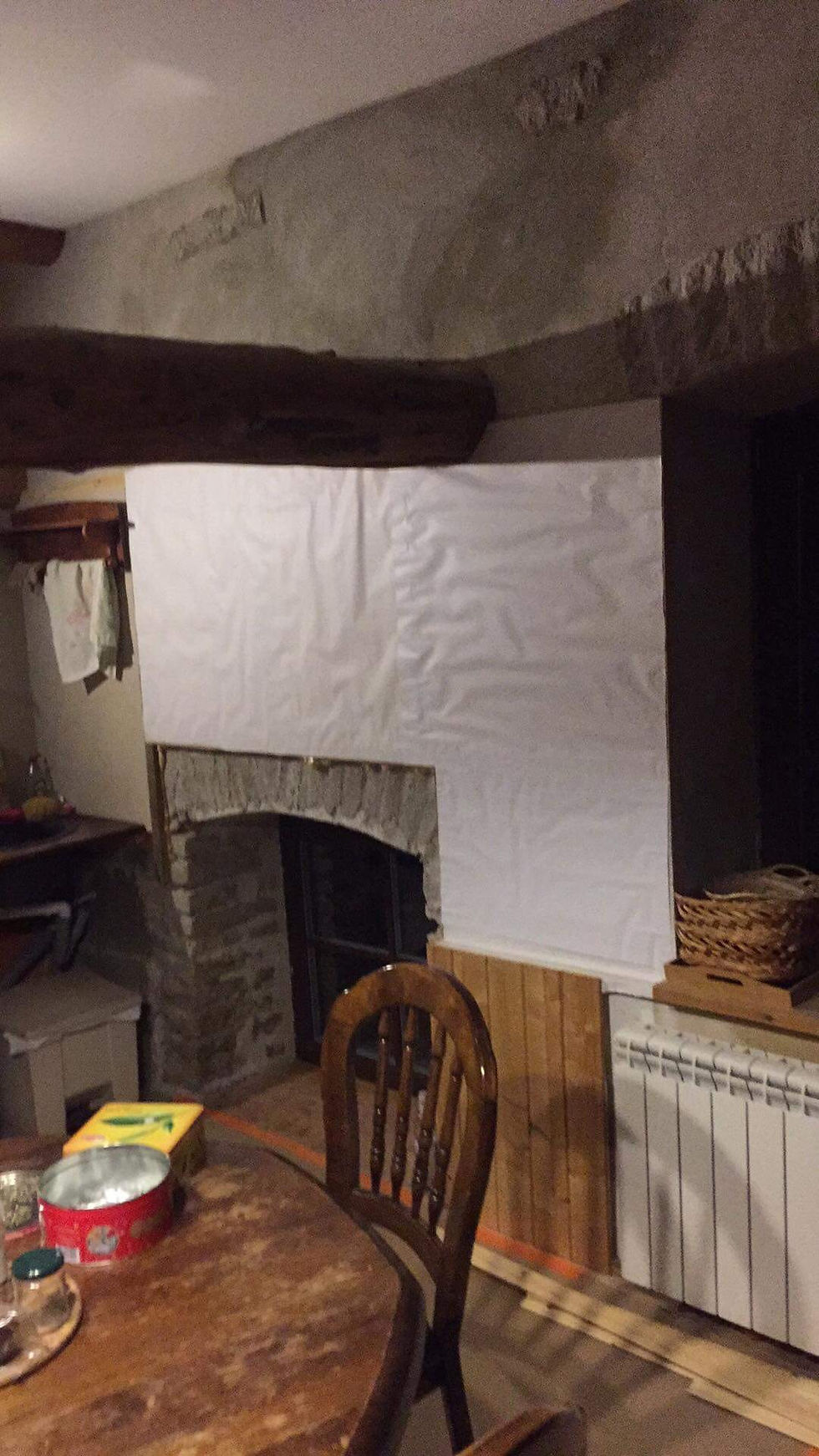
A quick note, it is not known what material or finish had been planned by previous owner. As seen in the kitchen photo above they had used concrete plaster, possibly to be painted ower. In thelounge photo light coloured plaster is seen, again likely with cement mix.
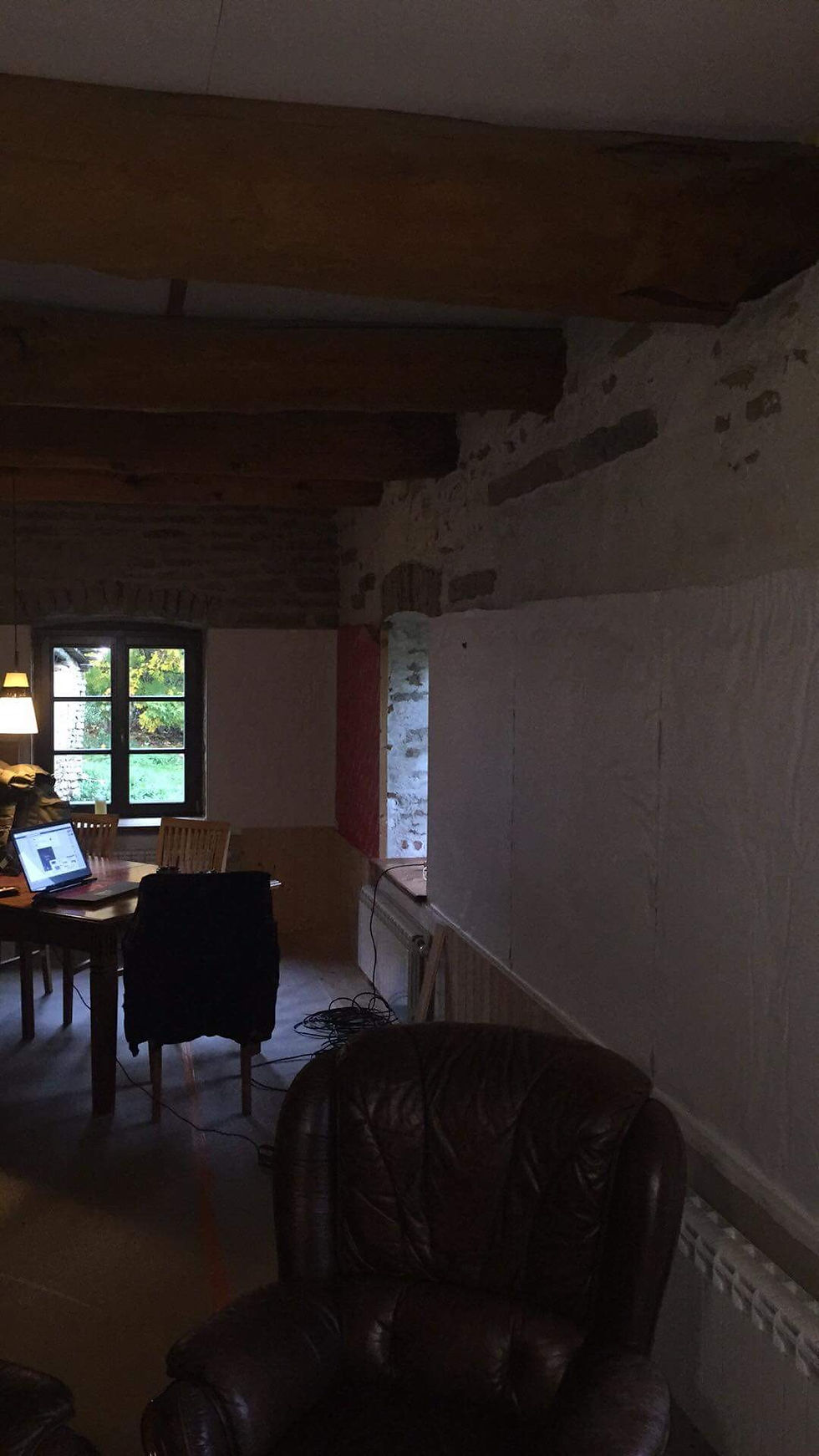
Time was working against us as the plaster would need minimum 8 degrees Celsius to cure properly, we were moving closer to winter with every day. Works were delayed with electrics and fireplace which could have extended our autumn by keeping internal temperatures up further delays with plasterers own schedules running overtime. But finally at the very end of November 2018 the plasterers arrived together with vans full of thermal plaster and lime.
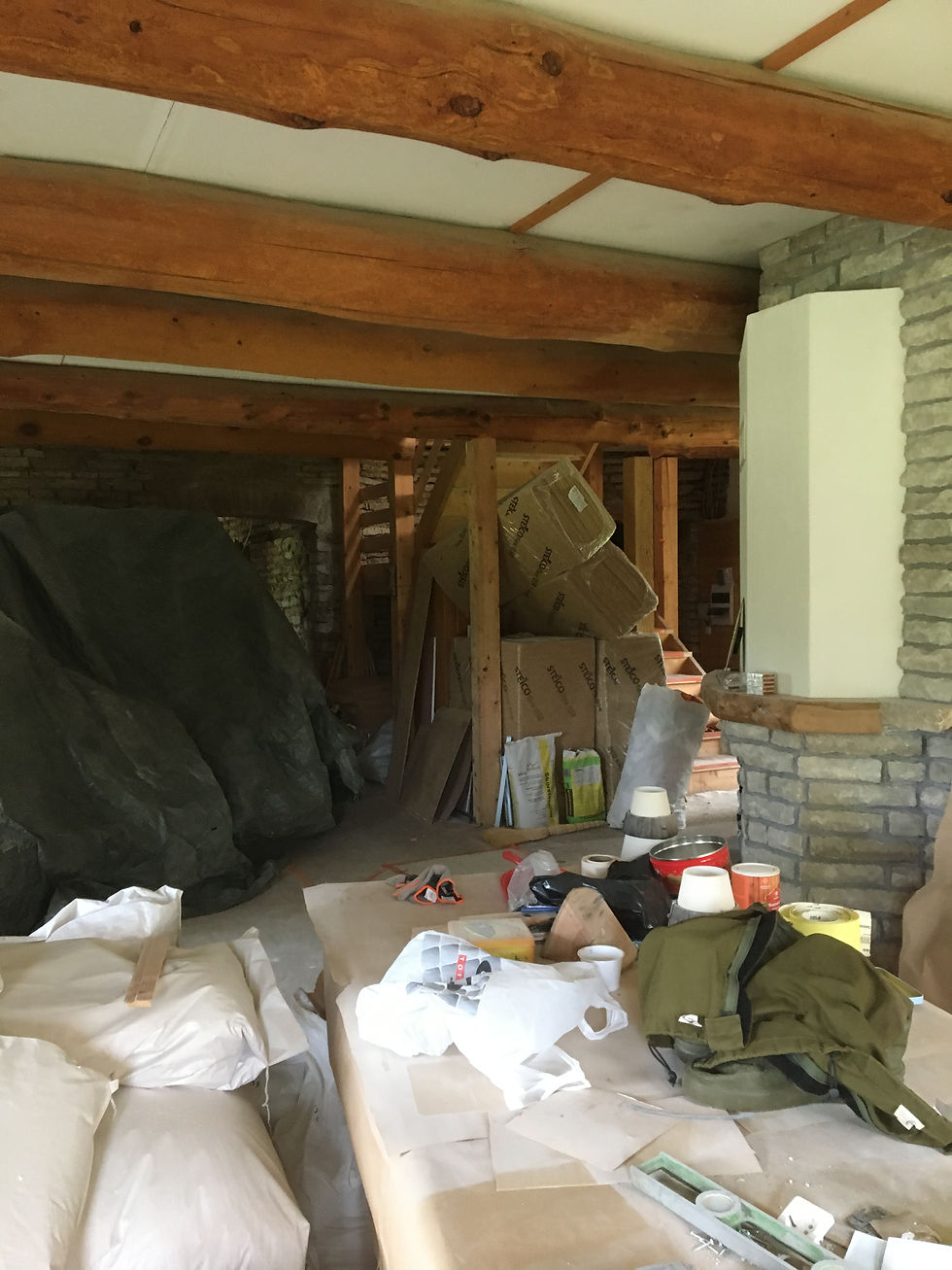
At this point the temperatures had dropped further. The plasterers inspected the site and took temperature measurements from window alcoves. The results were devastating. Temperature of the walls had already dropped past curing minimum of 8 degrees and weather forecast showed it plummeting further in coming days. With heavy heart decision was made to postpone the works to spring.
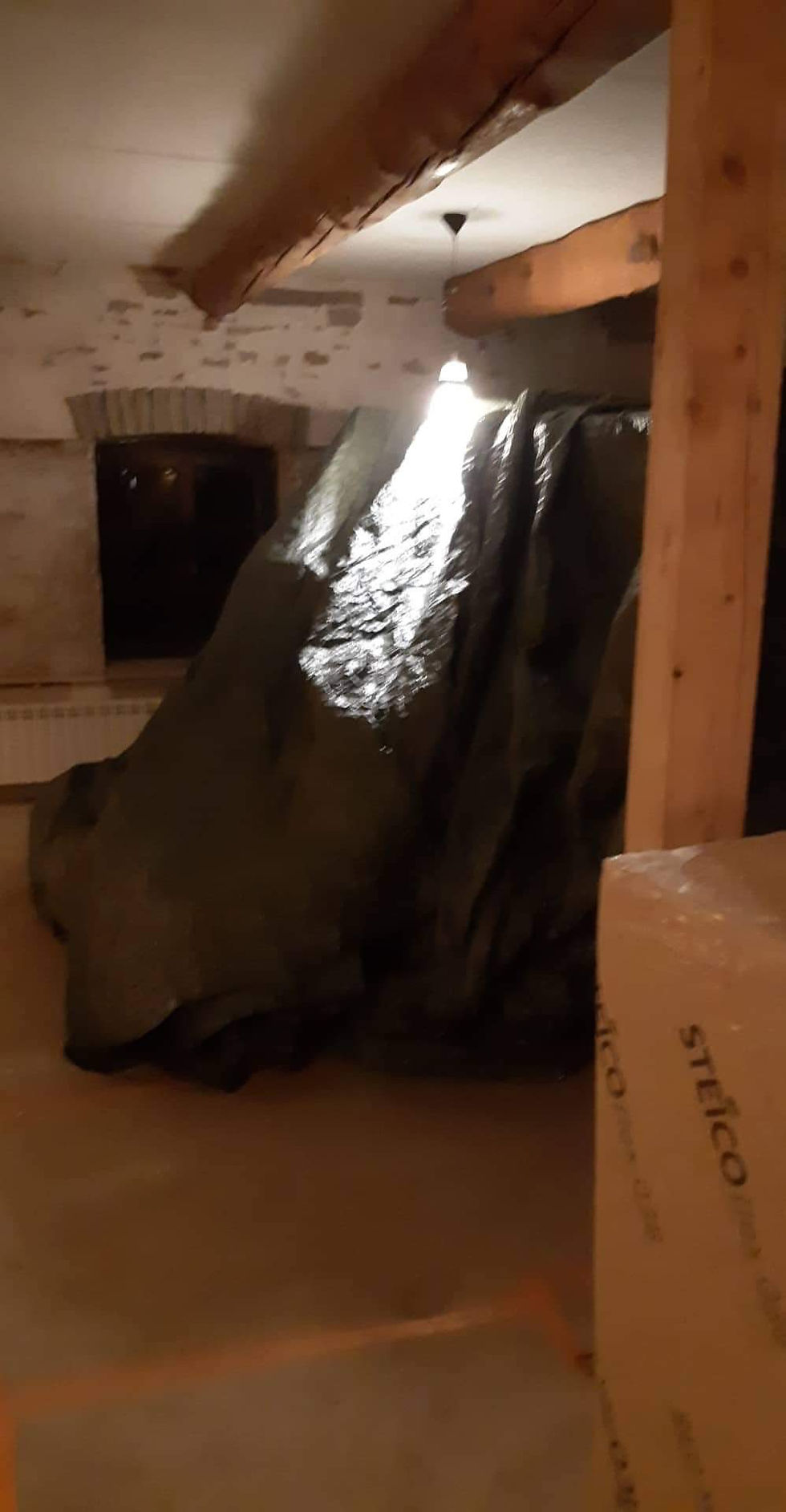
On the lead up to Christmas 2018 we had our hopes up of spending very first night in the house with cosy new fireplace completed (separate post on that) sipping tea whilst curled up on the sofa but the reality was anything but cosy. The lounge furniture was covered with dust sheeting. In the very centre of lounge we had about more than a tonne of plaster in bags. The house felt cold, damp and awfully dusty and dirty. I guess that is living on a building site for you. Staying even a night was not an option not even mentioning a whole holiday!
As an added note. I am not qualified to calculate U-Values and the results are based on my own internet research and manual calculations (subject to error). Limestone conductivity values depend on location, density etc. The above article was reviewed by person with far more experience in the field than me and has advised me that based on www.ubakus.com calculations the U-value for bare lime is 1.6W/m2K, insulated with thermal plaster 1.027W/m2K. Calculations on Resthunt.ee website are based on granite/earthstone so for anyone interested in more accurate figures for lime stone I suggest contacting the manufacturer who can advise you further.
More on the actual application of the plaster in another blog entry.


Comments